
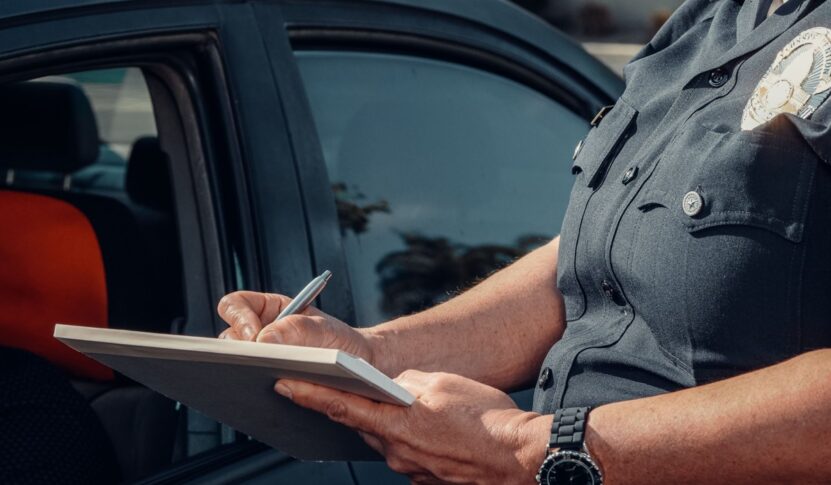
You are pulled over for speeding. The officer asks for your license and registration, then looks into the car and asks, “Do you mind if I take a look inside?”
That question creates a lot of confusion because many drivers assume police always need a warrant before searching a vehicle.
They do not.
The Fourth Amendment protects people from unreasonable searches and seizures, but cars receive less protection than homes. Under several well-established exceptions, police can search a vehicle without first getting a warrant.
The important part is why the search is happening. Consent, probable cause, an arrest, an inventory search and evidence visible from outside the car all create different legal situations.
This guide explains the federal constitutional rules that apply across the United States. State constitutions and state court decisions can give drivers stronger protections, so the exact answer can change depending on where the stop happens.
When Can Police Search A Car Without A Warrant?
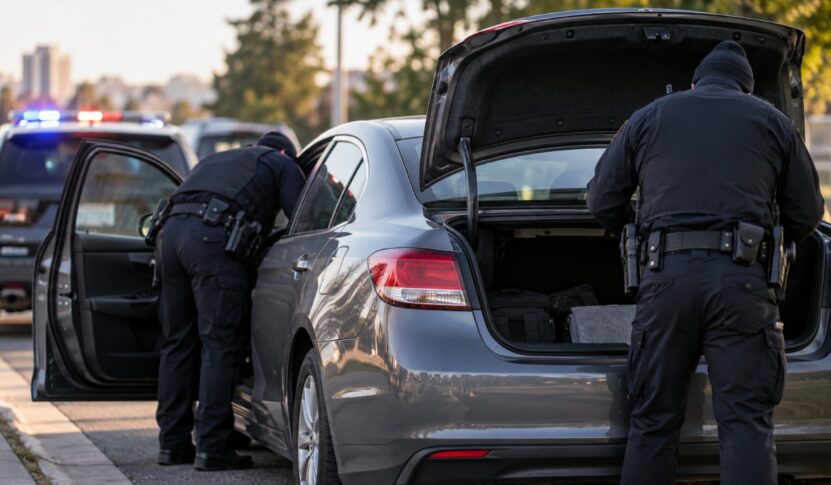
The main situations are easier to understand when they are separated.
| Situation | Can Police Search? | Main Limit |
|---|---|---|
| You give permission | Yes | Consent must be voluntary and the search should stay within the permission given. |
| Police have probable cause | Yes | They can search places where the suspected evidence could reasonably be found. |
| You are arrested | Sometimes | An arrest does not automatically allow a full vehicle search. |
| The car is lawfully impounded | Sometimes | Inventory searches must follow standardized procedures. |
| Illegal evidence is in plain view | Potentially | The officer must be lawfully in a position to see it. |
| A drug dog alerts | Potentially | The stop cannot be unlawfully extended just to conduct the sniff. |
The federal rules grew from nearly a century of Supreme Court decisions. Congress’s Constitution Annotated explains the basic vehicle search rules under the Fourth Amendment.
Probable Cause Is The Biggest Exception
The most important rule for drivers is called the automobile exception.
Police do not need a warrant when they have probable cause to believe a vehicle contains contraband or evidence of a crime.
Probable cause requires more than a guess. Officers need facts that would give a reasonable basis to believe evidence is inside the vehicle.
Examples can include information from a reliable witness, drugs seen through a window, evidence connected to an investigation, or several facts discovered during the traffic stop that point toward criminal activity.
The rule began with Carroll v. United States in 1925. Federal agents suspected that George Carroll was transporting illegal liquor during Prohibition and searched his car without a warrant. The Supreme Court recognized that vehicles are different from houses because they can quickly be moved before officers obtain a warrant.
The doctrine has expanded since then, but probable cause remains the key requirement.
Probable Cause Can Allow A Search Of The Trunk
A common misunderstanding is that police can search the seats but need a separate warrant for the trunk.
That is not the federal rule.
In United States v. Ross, the Supreme Court held that when officers have probable cause to search a vehicle for a particular object, they can search areas where that object could reasonably be hidden.
The decision allows a search of vehicle compartments and containers when the probable cause is broad enough to cover them.
Imagine police have probable cause to believe a stolen rifle is inside a car. They can look in the trunk because a rifle can fit there. Searching a small coin compartment for the same rifle would make no sense because the object could not be hidden there.
The suspected evidence therefore controls how far the search can go.
You Can Refuse A Consent Search
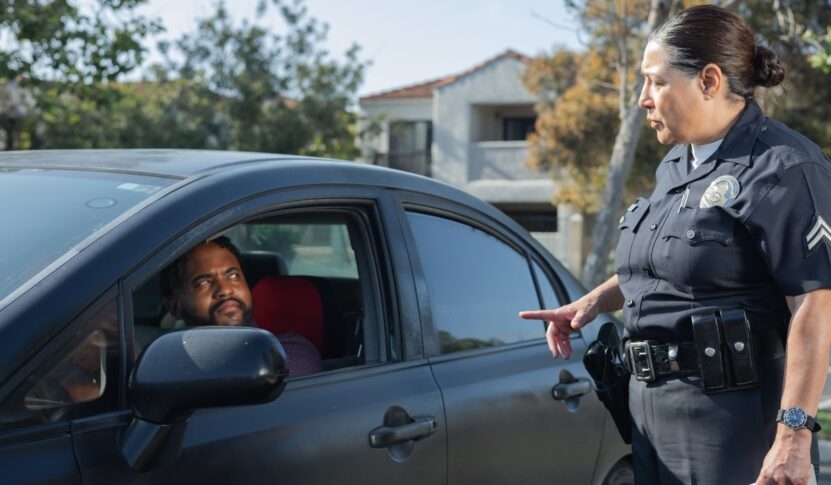
Probable cause is not always involved. Sometimes the officer simply asks.
“Can I search your car?”
If you say yes, your consent can provide legal authority for the search even when the officer did not have probable cause beforehand.
The Supreme Court held in Schneckloth v. Bustamonte that voluntary consent can make a warrantless search lawful. Courts look at the surrounding circumstances to decide whether consent was actually voluntary.
The general rules for warrantless searches also recognize consent as a major exception to the warrant requirement.
Refusing Permission Is Not The Same As Blocking Police
A driver can say:
“I do not consent to a search.”
That statement preserves your position. It does not physically prevent police from searching if they claim another legal basis.
If officers say they are searching because they have probable cause, resisting physically is not the way to challenge the search. The legality can be challenged later through a lawyer and, when criminal charges follow, through a motion to suppress evidence.
We also made a more detailed guide covering the right to refuse searches and other protections during police encounters.
Consent Can Have Limits
Permission is also important because its wording can affect the scope of the search.
If someone clearly allows an officer to inspect one bag, that does not automatically mean they agreed to a search of every part of the vehicle.
Disputes over consent become very fact-specific. Courts can examine exactly what was said, what a reasonable officer would have understood, and whether permission was withdrawn.
A Traffic Violation Alone Does Not Automatically Allow A Search
Being stopped for speeding does not give police a free pass to search the car.
The officer can carry out tasks connected to the traffic stop, including checking the driver’s license, registration, insurance and outstanding warrants.
A separate search still needs a lawful basis.
That basis can develop during the stop. An officer may see contraband, receive new information, obtain consent or develop probable cause from several facts.
But the original speeding violation itself is not a blanket search authorization.
Police Cannot Extend A Stop Forever Looking For A Reason To Search
Traffic stops also have a time limit connected to their purpose.
In Rodriguez v. United States, an officer completed a traffic warning and then kept the driver detained while waiting to conduct a drug-dog sniff.
The Supreme Court ruled that police cannot prolong a completed traffic stop for an unrelated dog sniff without independent reasonable suspicion of criminal activity.
The Rodriguez ruling is important because a lawful stop does not become an unlimited investigation.
A Dog Sniff And A Car Search Are Different Steps
A trained drug dog walking around the outside of a vehicle is treated differently from an officer physically searching the interior.
If the dog lawfully alerts to narcotics, that alert can contribute to probable cause for a vehicle search.
The timing still matters. Police cannot finish the traffic stop and then keep a driver there longer just because they want time for a dog to arrive, unless another legal basis supports the continued detention.
An Arrest Does Not Automatically Open The Whole Car
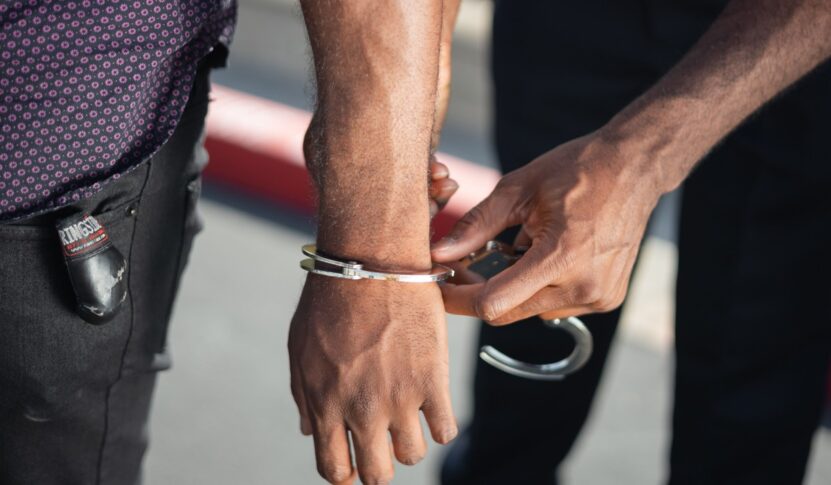
Another common belief is that once a driver is arrested, police can automatically search the entire vehicle.
The Supreme Court rejected that broad rule.
In Arizona v. Gant, Rodney Gant had already been arrested, handcuffed and placed in a patrol car when officers searched his vehicle and found cocaine.
The Court held that a search after an arrest is allowed in two main situations:
- the arrested person could still reach the passenger compartment, or
- officers reasonably believe the vehicle contains evidence related to the offense of arrest
The second point matters in practice.
If someone is arrested for a suspended driver’s license, evidence of that offense is not likely to be hidden in the car. If someone is arrested for an offense involving drugs or stolen property, evidence connected to that offense could be inside.
Another exception, such as independent probable cause, can still authorize a search even when the search-incident-to-arrest rule does not.
What If Police See Something Through The Window?
Drivers do not have the same privacy interest in objects that are openly visible from outside the vehicle.
If an officer lawfully approaches a car and sees an illegal firearm, drugs or another clearly incriminating object in plain view, that observation can change the stop quickly.
The officer may be able to seize the visible evidence and, depending on the surrounding facts, develop probable cause for a wider search.
The key point is that officers must be lawfully positioned when they see the object. The plain-view rule does not give police permission to enter protected property first and then rely on what they saw after the unlawful entry.
A Car Parked At Your Home Gets More Protection
The automobile exception is strong, but it does not erase the special Fourth Amendment protection around a home.
That became clear in Collins v. Virginia.
Police suspected that a motorcycle connected to traffic offenses was parked at a home. An officer walked onto the property, entered the area beside the house and removed a cover from the motorcycle without a warrant.
The Supreme Court held that the automobile exception did not give police authority to enter the home’s protected curtilage just because a vehicle was sitting there.
In other words, probable cause that could justify searching a car parked on a public road does not automatically let officers walk into the protected area of your home to reach it.
Police Can Conduct Inventory Searches After Impoundment
There is another type of search that has little to do with investigating the original offense.
If police lawfully impound a vehicle, they can sometimes conduct an inventory of its contents.
The purpose is supposed to be administrative. Departments inventory property to protect the owner’s belongings, guard against claims that items disappeared in police custody and identify dangerous items inside the vehicle.
An inventory search is not supposed to be a convenient excuse to search for evidence.
The Supreme Court has allowed these searches when officers follow standardized procedures rather than making up a search policy for one particular driver.
Towing The Car Does Not Automatically Make Every Search Valid
Two questions become important:
- Was the vehicle lawfully impounded?
- Did officers follow their department’s normal inventory procedure?
If police departed from normal policy because they wanted to investigate a crime, a defense lawyer can challenge the search.
What About Marijuana Smell?
This has become one of the most state-dependent areas of vehicle-search law.
Years ago, courts in many states treated the smell of marijuana as strong evidence that illegal drugs were inside the vehicle.
Legalization changed that logic.
If possession of a certain amount of marijuana is legal, smelling marijuana does not necessarily mean a crime is taking place.
We found a great example in Michigan. Its courts now state that marijuana odor alone is insufficient to establish probable cause after legalization. The smell can still be considered alongside other facts suggesting illegal possession, use while driving or another offense.
Other states apply different rules. Drivers should not assume that a marijuana-related search will be analyzed the same way in every jurisdiction.
Can Police Search Locked Bags And Containers?
Sometimes.
If officers have probable cause to search the entire car for an item, they can inspect containers that could hold that item.
A small bag could contain drugs. A suitcase could contain stolen property. A trunk could contain a firearm.
The scope depends on what officers are lawfully looking for.
A search for a stolen television would not justify opening a tiny wallet because the television cannot fit inside it.
If probable cause points only to one specific container rather than the whole car, Supreme Court precedent also allows officers to search that container without a warrant when it is inside the vehicle.
Can Police Search Your Phone If It Is In The Car?
A phone is different from an ordinary container.
Finding a phone inside a car does not generally give officers permission to open it and search messages, photographs, apps and other digital information.
The Supreme Court has recognized that modern phones contain an enormous amount of private information and generally require a warrant before police search their digital contents.
The fact that a phone was sitting in a searchable vehicle does not turn its data into the equivalent of items sitting in the glove box.
What Should You Do If Police Ask To Search Your Car?
You do not need to argue constitutional law at the roadside.
If the officer is asking for consent and you do not want to give it, a clear answer is enough:
“I do not consent to a search.”
After that, avoid physically interfering.
If police search anyway, remember what happened. Important details can include:
- why the officer said you were stopped
- what questions were asked
- if and when you were given a ticket or warning
- what the officer said before searching
- whether you gave consent
- how long the stop lasted
- whether a dog was brought to the scene
- what areas of the vehicle were searched
- whether the car was later towed
Body-camera footage, dash-camera recordings, dispatch records and police reports can later become important when a lawyer reconstructs the stop.
What Happens If The Search Was Illegal?
An unlawful search does not automatically make the entire criminal case disappear.
The usual defense response is a motion to suppress.
The defense asks the court to exclude evidence obtained through a Fourth Amendment violation. If the evidence is central to the prosecution, suppressing it can seriously weaken the case.
For example, if the only drugs supporting a possession charge came from an unconstitutional car search, keeping those drugs out of evidence could change what charges the prosecution can prove.
There are exceptions to exclusion. Courts sometimes allow evidence despite a constitutional problem when another doctrine applies.
One important example is the good faith exception, which deals with circumstances where officers reasonably relied on legal authority that later turned out to be defective.
FAQs
Can Police Search My Car Just Because I Was Speeding?
No. A traffic violation allows police to stop the vehicle, but speeding alone does not create automatic authority to search the interior. Police need consent, probable cause or another recognized exception.
Do Police Need To Tell Me I Can Refuse A Search?
Not in every situation. Voluntary consent can still be valid even if an officer did not first explain that you were free to refuse. Courts examine the full circumstances surrounding the consent.
Can Police Search My Trunk Without A Warrant?
Yes, when probable cause supports a search for evidence that could be located in the trunk. The trunk is not automatically protected by a separate warrant requirement.
Can Police Search A Passenger’s Bag?
Potentially. If officers have probable cause to search the vehicle for an object and the passenger’s container could hold that object, federal precedent can allow the container to be searched. Ownership of the bag does not automatically block the search.
Does Refusing Consent Give Police Probable Cause?
Refusing permission does not by itself create probable cause. Police still need facts supporting another legal basis if they want to search without consent.
Can Police Search A Rental Car?
Rental status does not eliminate Fourth Amendment protections. The analysis can depend on who has lawful possession of the vehicle and why police want to search it. Probable cause and the normal automobile exception can still apply.
Can Police Search My Car After Towing It?
They may conduct a lawful inventory search after impoundment if the tow itself is proper and officers follow standardized inventory procedures. Police cannot simply label an evidence search an “inventory” to avoid Fourth Amendment requirements.
Final Thoughts
Police can search a car without a warrant in several situations, but a traffic stop alone does not give officers unlimited access to the vehicle.
Probable cause is the main exception. When police have facts showing that evidence or contraband is probably inside, they can search the places where that evidence could reasonably be hidden. Voluntary consent provides another route, and arrests, impoundments and visible evidence create their own narrower rules.
The details of the stop decide which rule applies. A driver arrested for a suspended license is in a different position from a driver whose car contains drugs visible through the window. A vehicle parked on the street is treated differently from one inside the protected area of a home. Marijuana odor can also mean something different in a state where possession has been legalized.
At the roadside, a driver who does not want to agree to a search can say, “I do not consent to a search,” and avoid physically interfering. If police search anyway, the legal fight belongs in court, where the facts, footage and officer’s stated reason for the search can be examined properly.