
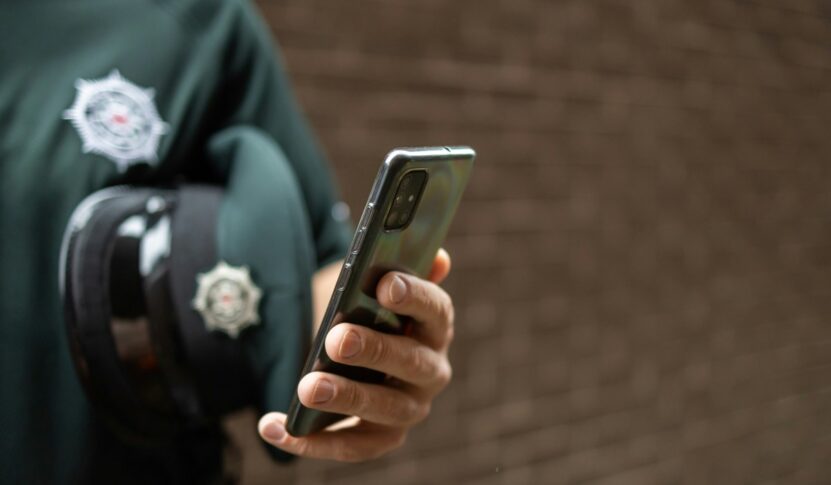
Courts are still fighting over this question, and the answer can change with a small detail.
In one federal case, officers grabbed a man’s thumb and used it to open his phone. The Ninth Circuit allowed it. In another, an FBI agent told a man to open his phone and he used his thumb himself. The D.C. Circuit ruled that the act was protected by the Fifth Amendment.
That gap is the key to the whole issue. A fingerprint is a physical feature, but using it to open a specific phone can also reveal that you know how to access the device.
Before getting into the cases, keep one rule in mind. A warrant allowing police to search your phone does not automatically give them the right to force you to help open it.
Police Usually Need a Warrant to Search Your Phone
The Supreme Court dealt with smartphone searches in Riley v. California, 573 U.S. 373 (2014).
Police had searched phones after making arrests. The government argued that officers should be allowed to inspect the devices under the same rule that lets them search physical items found on an arrested person.
The Supreme Court rejected that argument. A modern phone can hold years of messages, photographs, location records and other private information. Arresting someone does not give officers automatic access to all of it.
Police can still search a phone with a valid warrant, voluntary consent or another recognized exception. Center For Justice covers consent and warrant exceptions in more detail in its guide to police searches without a warrant.
Getting permission to search the device is only the first issue. If the phone is locked, officers still need a way inside.
Fingerprint Unlock Can Become Testimony
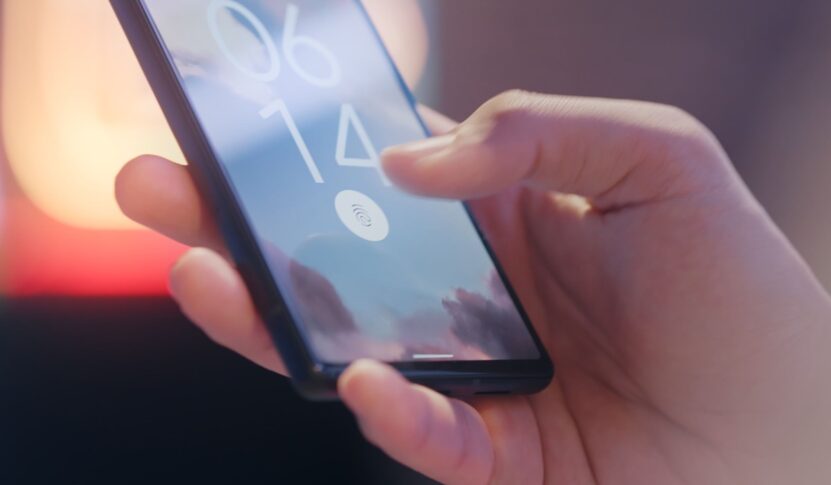
Police have long been allowed to collect fingerprints for identification. Taking the print does not require a person to remember or explain anything.
A phone unlock is not always that simple.
Imagine officers have a locked phone and tell its owner to open it. The owner selects one finger, touches the sensor and the phone opens. That action has now told police that the person knows how to access the device.
If ownership or control is disputed, the unlock can become evidence in its own right.
Recent courts have focused heavily on that point.
Officers Grabbed Payne’s Thumb and the Ninth Circuit Allowed It
Jeremy Payne was on California parole when highway patrol officers stopped him. During the encounter, Payne told them that his phone was in the driver-side door and described its color. He later refused to give them the passcode.
An officer then grabbed Payne’s thumb and used it to open the phone.
The Ninth Circuit considered that conduct in United States v. Payne, 99 F.4th 495 (9th Cir. 2024).
The court accepted that officers had compelled the act. It still found no Fifth Amendment violation because Payne did not have to provide information from his memory. Officers chose the thumb and physically used it themselves.
Payne had also already connected himself to the phone. He told officers that he had a phone, described it and told them where to find it.
The Ninth Circuit treated the thumb more like a physical characteristic than a statement.
But the judges did not give police a blank check. The opinion specifically left room for another result if officers required someone to identify the finger that opens the device.
Payne’s parole status also affected the separate Fourth Amendment issue. His parole conditions gave officers search authority that an ordinary driver would not automatically face.
The D.C. Circuit Saw a Very Different Problem in Brown
The D.C. Circuit reached the other result in United States v. Brown, 125 F.4th 1186 (D.C. Cir. 2025).
The case name needs a short explanation because it can confuse researchers. Brown combined several appeals. Peter Schwartz was the person forced to open the phone, and his appeal was handled inside the Brown decision.
An FBI agent told Schwartz to open his cellphone. Schwartz responded by placing his thumb on it.
The D.C. Circuit held that he had been forced to give testimonial information.
Schwartz did not simply hand over a fingerprint for identification. By opening the device, he demonstrated that he knew how to get into it and had control over it.
That is the practical lesson from Brown. The Fifth Amendment issue becomes stronger when police need the person to supply knowledge, not just a body part.
New York Reached the Same Conclusion in 2025
Spencer Manganiello faced a similar problem in New York.
Police had a warrant allowing them to attempt access to electronic devices through fingerprints or a facial image. Officers told Manganiello that he had to open his phone. He chose a finger and used it successfully.
In People v. Manganiello, 242 A.D.3d 41 (N.Y. App. Div. 2025), the court ruled that the act was testimonial.
Manganiello had done something the officers in Payne did not need from Payne. He selected the biometric credential himself.
By choosing the correct finger and opening the device, he showed that he knew how to access the phone.
The New York court treated that information as protected by the Fifth Amendment.
| Case | What Happened | Result |
|---|---|---|
| United States v. Payne | Officers selected Payne’s thumb and physically used it | Not testimonial on those facts |
| United States v. Brown | Schwartz was told to open the phone and used his thumb | Testimonial |
| People v. Manganiello | Manganiello chose the finger that opened the phone | Testimonial |
The Finger You Choose Can Change the Case
The cases become much easier to follow once you remove the legal jargon.
If officers already know which finger opens the phone and use it themselves, they are not asking you to remember anything. That was close to the situation in Payne.
If they tell you to open the device and you choose the finger that works, you are giving them information through your action. Brown and Manganiello both turned on that problem.
That is why the statement “fingerprints are physical evidence” does not settle every phone case.
Face ID Has Less Direct Case Law
Recent appellate decisions have dealt far more directly with fingerprints than completed forced Face ID access.
Manganiello came close because the warrant allowed officers to use either fingerprints or a facial image. The actual unlock in that case happened with a finger, so the New York court did not decide a completed Face ID compulsion.
Face ID can also require another kind of cooperation. An officer might hold the phone in front of someone, or order that person to look at the screen so the device can authenticate the face.
A court would still have to ask if the person merely supplied a physical characteristic or actively demonstrated control over the phone.
Until higher courts address a direct Face ID case, fingerprint rulings give us the closest guidance, not a final answer.
A Search Warrant Does Not Automatically Let Police Force an Unlock
A search warrant can authorize police to look for evidence inside a phone. It does not erase the Fifth Amendment.
Brown makes that clear. Investigators had legal authority connected to the phone search, but the D.C. Circuit still found a constitutional violation when Schwartz was ordered to help open the device.
Manganiello makes the point even stronger. The warrant itself mentioned biometric access. New York’s appellate court still ruled that forcing Manganiello to select the correct finger crossed the Fifth Amendment line.
So if a warrant exists, read what it actually authorizes. Permission to seize a phone, permission to search it and authority to compel assistance are separate issues.
Passcodes Raise an Even Clearer Memory Problem
A fingerprint is physically present whether the person wants to cooperate or not. A memorized PIN exists in the person’s mind.
That makes passcodes more obviously testimonial, although courts have still allowed compelled access in some cases.
One reason is the foregone conclusion doctrine. Prosecutors sometimes argue that forcing access reveals nothing new because investigators already know that the person owns the phone and knows the credential.
New Jersey accepted that reasoning in State v. Andrews, where the state supreme court allowed compelled disclosure of passcodes after finding that investigators already knew enough about the defendant’s control of the phones. The New Jersey Supreme Court opinion explains that analysis.
Indiana went the other way in Seo v. State. Its supreme court rejected an order requiring Katelin Seo to produce an unlocked phone because doing so would communicate information the government had not independently established. The Seo decision also warned against applying an old document-production doctrine too freely to smartphones.
Refusing an Officer Is Not the Same as Ignoring a Judge
If an officer asks you to open a phone voluntarily and you say no, police do not get automatic access because you refused.
They can keep a phone that was lawfully seized. They can seek a warrant or another court order. Investigators can also use forensic methods if the law allows them to search the device.
A judge’s order is different.
A court can use civil contempt to force compliance with an order. In some cases, that means confinement until the person complies. The Supreme Court has described coercive civil contempt as a sanction designed to pressure someone into doing the act the court has required. International Union, United Mine Workers v. Bagwell, 512 U.S. 821 (1994), explains the line between coercive civil contempt and criminal punishment.
Criminal contempt serves another purpose. It punishes completed disobedience and comes with criminal procedural protections.
So if police ask for voluntary access, refusal and consent are the immediate issues. Once a judge signs an order directing access, the fight moves into court.
You Can Temporarily Disable Face ID Before an Encounter
Phone settings can remove biometrics from the immediate situation.
Apple says an iPhone user can temporarily disable Face ID by holding the side button and either volume button for two seconds. After the emergency sliders appear, pressing the side button locks the phone. The next unlock requires the passcode. Apple lists the steps in its Face ID instructions.
Android also has a Lockdown feature on supported devices. Google says Lockdown temporarily disables biometric authentication until the phone is opened again with the primary credential. Google describes the feature in its Android security guidance.
Using either feature does not create a new legal right. It simply means the phone will ask for the passcode instead of accepting a face or fingerprint at that moment.
The Supreme Court Has Not Resolved the Conflict
Payne asked the U.S. Supreme Court to review the Ninth Circuit ruling.
The Court denied his petition on November 25, 2024. The Supreme Court docket for No. 24-5871 records the denial.
That did not turn the Ninth Circuit decision into a nationwide rule. A denial of review leaves the lower-court judgment in place without deciding the issue for the rest of the country.
The timing also counts. Brown came in January 2025, after the Supreme Court had already declined Payne. Manganiello followed in June 2025.
So the conflict became clearer after the Supreme Court passed on the earlier case.
What Should You Do If Police Ask You to Open the Phone?
If the request is voluntary, you can clearly say that you do not consent to the search or to opening the device. CForJustice also covers the right to refuse consent and other protections during police encounters.
If officers already have a signed court order, the situation changes. Do not turn the legal dispute into a physical confrontation. A lawyer can challenge the order, seek a stay or argue that forced access violates the Fifth Amendment.
Phone settings also give you a practical choice before police ever ask. Face ID and fingerprint access can be temporarily disabled so the device requires the primary credential instead.
Most of all, do not assume that a warrant answers every question. A judge can authorize a search and still leave a separate fight over forcing you to help open the phone.
Right now, that fight can end very differently depending on the court hearing it. Payne allowed officers to use a thumb they selected themselves. Brown and Manganiello protected people who were made to demonstrate access.
Until the Supreme Court takes the issue directly, that is the clearest way to read the law.