
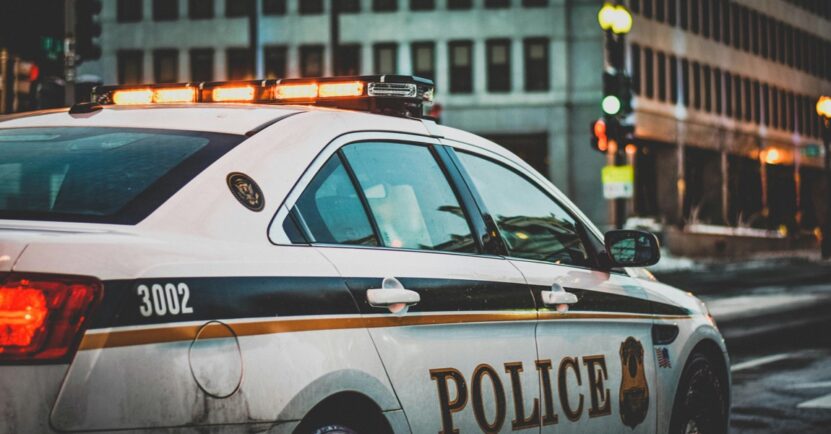
A police officer pulls you over, searches your car, or uses force during an arrest. You believe something about the encounter was wrong. You want to report it, but you do not know where to start. Should you call the same police department? Contact the FBI? Speak to a lawyer first?
You can file a complaint against a police officer in the United States even if you were arrested or received a ticket. You do not need to know the officer’s name, and you do not have to prove that a crime occurred before reporting possible misconduct.
The usual starting point is the police department’s Internal Affairs or Professional Standards unit. Some cities have independent civilian oversight agencies, and serious civil rights allegations can also be reported to federal authorities.
Before you submit anything, write down what happened and save the evidence you have. A complaint filed with a clear account, photographs, witness information or a video gives investigators something specific to examine.
Where Should You File a Complaint Against a Police Officer?
Imagine that an officer searches your vehicle after you refuse permission. You could report that encounter to the department employing the officer. If you believe the search also violated your constitutional rights, you may have additional options.
Reporting possible misconduct to Internal Affairs is not the same as reporting a possible federal crime. The offices have separate responsibilities, and one report does not automatically start an investigation at every level.
| Where to Report | What It Handles |
|---|---|
| Internal Affairs or Professional Standards | Alleged violations of department rules, improper conduct, dishonesty and misuse of authority |
| Civilian Oversight Agency | Police misconduct complaints within its jurisdiction, according to its investigative authority |
| State Police Certification Agency | Certain serious violations that may affect an officer’s professional certification |
| FBI | Possible federal criminal civil rights violations, including qualifying excessive-force cases |
| U.S. Department of Justice | Reports involving federal civil rights laws, discrimination or repeated unlawful police practices |
The Justice Department’s police misconduct guide explains how federal criminal and civil enforcement works.
If your complaint concerns a sheriff’s deputy, contact the sheriff’s office or the county agency responsible for reviewing complaints. Federal officers may be subject to separate inspector general or agency-specific procedures.
How to File a Complaint Against a Police Officer Step by Step
A step-by-step video explaining how to file a complaint against a police officer, where to report misconduct, what evidence to provide, and what happens after submitting your complaint.
1. Write Down What Happened Before You Forget the Details
Suppose an officer stopped your car at about 9 p.m. on Friday. During the stop, the officer opened your trunk after you refused permission to search.
A week later, you may remember being upset but forget the name of the street, the exact time or the officer’s words.
Write everything down as soon as you safely can. Include:
- The date, time and location of the incident
- The officer’s name and badge number, if known
- The police department or sheriff’s office involved
- What the officer said and did, in chronological order
- Names and contact details of witnesses
- Any injuries, damaged property or medical treatment
- Evidence that you have or believe the department may possess
If you do not know the officer’s name, that should not stop you. Departments may be able to identify the officer using dispatch logs, patrol assignments and recordings.
Separate what you personally saw from what another person told you. Do not guess at missing details to make the account sound more complete.
2. Save Photos, Recordings and Medical Records
Your phone may contain the clearest evidence of what happened. Save the original video, including the moments before and after the incident. Keep a separate backup so that losing your phone does not mean losing the recording.
Photograph injuries and property damage. Keep medical bills, discharge paperwork, citations and relevant messages.
Do not edit the only copy of a recording or delete material because it appears unrelated. The complete sequence can help establish what happened.
If the incident involved a vehicle search, our guide to police searches without a warrant explains why consent, probable cause and other legal exceptions affect the legality of a search.
3. Ask the Department to Preserve Body-Camera Footage
You may not have recorded the encounter yourself. The officer’s body camera or patrol-car camera could still contain useful evidence.
Contact the police department promptly and identify the incident by date, time and location. Ask how to submit a written preservation request for any relevant recordings.
Some departments delete routine recordings after a specified retention period unless the material has been flagged for an investigation or another legal reason.
A preservation request is not a guarantee that footage exists or that the department will release it. Public access also depends on state law and the circumstances of the incident.
For serious injuries or possible litigation, an attorney can help address preservation obligations and formal requests for evidence.
4. Find the Official Complaint Form
Visit the police department’s website and look for Internal Affairs, Professional Standards, Civilian Complaints or a similar heading.
Some departments let you file online. Others accept complaints by email, mail, telephone or in person.
If you cannot find the form, contact the department’s administrative office and ask where written misconduct complaints are accepted.
You may also have an independent option. Cities including New York have civilian oversight systems with their own procedures. Their authority depends on local law, so a civilian board in one city may have powers that another city’s board does not.
5. Describe the Conduct, Not Just Your Reaction
An investigator cannot learn much from a complaint saying that an officer was abusive or violated your rights. The important information is what the officer actually did.
Compare the following descriptions.
Too vague
“The officer harassed me and searched my car illegally.”
More useful
“On October 15 at about 8:40 p.m., an officer stopped me near Main Street and Third Avenue. The officer asked to search my car, and I refused permission. The officer then opened the trunk. I did not see a warrant, and the officer did not explain the reason for the search.”
The second account gives investigators a time, location and sequence to check against recordings and other evidence.
It also avoids claiming that the search was automatically unlawful. Police sometimes have legal grounds to search a vehicle without consent or a warrant, so the facts surrounding the search remain important.
6. Submit the Complaint and Keep a Copy
Before submitting, save your statement and attachments. If you use an online form, keep the confirmation email or take a screenshot of the submission receipt.
Ask for a complaint number and the name of the office responsible for reviewing your report.
If the department provides no confirmation, contact it again through an official channel and refer to your original submission date. Keep a record of that contact as well.
Example of a Complaint Letter Against a Police Officer
You can write your own complaint without legal terminology. The example below concerns a vehicle search, but the same approach works for allegations involving unnecessary force, threats or other conduct.
Subject: Complaint Regarding Officer Conduct on October 15, 2026
To the Professional Standards Unit,
I am submitting a complaint about a traffic stop on October 15, 2026, at about 8:40 p.m. near Main Street and Third Avenue.
During the stop, an officer asked for permission to search my vehicle. I declined. The officer then opened my trunk and searched inside. I was not shown a warrant, and the officer did not explain the reason for the search.
I have a video recording of part of the incident and a copy of the traffic citation.
Please review the officer’s conduct and preserve any available body-camera and patrol-car recordings. I would also appreciate confirmation that my complaint has been received, along with a reference number.
Sincerely,
[Your Name]
[Your Contact Information]
Only include events that actually happened in your case. If you have an ongoing criminal case, discuss the statement with your defense attorney before submitting it.
Can You Report Police Misconduct Directly to the FBI?
Yes. The FBI accepts reports of possible federal criminal civil rights violations.
Under federal law, an officer who deliberately deprives someone of a protected right while exercising government authority may face criminal prosecution. The legal term for acting through government authority is “under color of law.”
Federal investigations can involve excessive force, sexual assault, deliberate denial of serious medical care to someone in custody or intentional false arrests.
However, federal prosecutors must establish more than the fact that an officer made a mistake. Criminal liability under 18 U.S.C. Section 242 generally requires proof of a willful violation.
The FBI’s civil rights reporting page explains the reporting process. Reports can be made through an FBI field office or the federal tip system.
If an officer was rude or violated an ordinary department rule without committing a federal offense, Internal Affairs is more likely to be the relevant complaint channel.
How to File a Civil Rights Complaint With the DOJ
The U.S. Department of Justice accepts reports involving possible violations of federal civil rights laws through its online civil rights reporting portal.
You can describe the police department, the incident and the rights you believe were violated. Supporting information can help officials assess your report.
The department also has authority to investigate repeated unlawful practices within state or local police agencies. Under federal police agency oversight law, its civil enforcement work can address systemic excessive force, discriminatory enforcement and unlawful searches.
A single complaint can contribute information to that work, but submitting a report does not mean DOJ will open an individual investigation or represent you in court.
What Happens After You File a Police Complaint?
The department may interview you, review recordings, contact witnesses and question the officer. Some investigations also involve supervisors or independent investigators.
You may receive a complaint number and later a written decision. The amount of information released depends on the agency and applicable state law.
| Possible Finding | What It Means |
|---|---|
| Sustained | Investigators found sufficient evidence that the alleged misconduct occurred |
| Not Sustained | There was insufficient evidence to establish the allegation |
| Unfounded | The investigation found that the alleged event did not occur |
| Exonerated | The conduct occurred but was found to comply with applicable rules |
Not every department uses the same terms. A sustained finding does not automatically mean an officer will be fired. Depending on the allegation and applicable procedures, consequences may include training, a written warning, suspension or dismissal.
Likewise, a finding that a department rule was not violated does not necessarily resolve every question about civil liability.
What If the Police Department Refuses Your Complaint?
Suppose you call the department and the person answering says there is no point submitting a complaint because the officer did nothing wrong.
A front-desk opinion is not the same as a completed investigation.
Record the date of your call and the name of the person you spoke with. Then use the department’s published written submission procedure or contact the supervisor responsible for Professional Standards.
If the department refuses to accept the report, a civilian oversight agency or state police standards authority may offer another channel, depending on the jurisdiction.
Retain copies of correspondence showing that you attempted to submit the complaint.
Can You File an Anonymous Police Complaint?
Some departments accept anonymous complaints. Others request identifying information because investigators may need to ask additional questions.
An anonymous complaint containing a clear video, exact date and location can still provide useful evidence. But the department may find it harder to investigate if nobody can clarify the account.
Read the agency’s confidentiality policy before submitting. Giving your name does not necessarily make your identity public, but confidentiality rules are not identical across the country.
What If an Officer Threatens You After You Complain?
A video explaining what to do if a police officer threatens you, how to document the incident, protect your rights, report the officer, and seek legal help.
Government retaliation for exercising protected rights can raise serious legal concerns.
For example, if an officer contacts you and threatens arrest specifically because you filed a complaint, keep the messages and document the contact. Do not assume the original investigation will automatically include later incidents.
The Department of Justice explains that criminal law enforcement misconduct can include efforts to prevent someone from reporting a violation or participating in an investigation.
Report immediate threats through an appropriate emergency channel. For nonemergency threats, an attorney can help assess the available reporting and legal options.
Can You Sue a Police Officer After Filing a Complaint?
An internal complaint and a lawsuit serve separate purposes.
The complaint asks an agency to investigate conduct. A lawsuit asks a court to provide a remedy for a legally recognized claim.
Under 42 U.S.C. Section 1983, people may bring certain civil claims against state or local officials for violations of federal rights. But success depends on the facts, applicable law, immunity defenses and filing deadlines.
Generally, you do not need to wait for Internal Affairs to finish before bringing a federal Section 1983 claim, although specific circumstances can affect legal requirements.
A police complaint also does not automatically stop the deadline for suing. Someone with serious injuries, criminal charges or a possible civil rights claim should get legal advice promptly.
Our article on rights during police encounters explains additional protections that may become relevant after a stop, search or arrest.
Frequently Asked Questions
Can I File a Complaint if I Was Arrested?
Yes. An arrest does not remove your ability to report alleged misconduct. However, if criminal charges are pending, statements in your complaint could become relevant to your case. Speak with your defense attorney before submitting a detailed account.
Do I Need the Officer’s Badge Number?
No. Give the department the location, time, description of the encounter and any other identifying information you have. Patrol assignments and dispatch records may help identify the officer.
How Long Do I Have to File a Complaint?
There is no single nationwide filing deadline for every police department. Some agencies have their own time limits or rules concerning older incidents. Civil lawsuits have separate deadlines, so do not assume an internal complaint preserves your right to sue.
Can a Witness File a Complaint Against an Officer?
Many agencies accept complaints from witnesses and other people who observed an incident. The complainant does not always have to be the person directly affected. Check the receiving agency’s rules about third-party reports.
Can I File a Complaint Without a Lawyer?
Yes. Most internal police complaint systems do not require legal representation. A lawyer becomes especially important when the incident involves serious injuries, an arrest, pending charges or a potential lawsuit.
Can I Withdraw a Complaint After Filing It?
You can ask the agency about withdrawing your complaint, but that does not guarantee the investigation will end. The department may continue examining allegations of serious misconduct even after the complainant no longer wishes to participate.
Will I Receive the Investigation Results?
Some departments send a final notification identifying the finding. Others provide limited information because of personnel confidentiality laws or ongoing proceedings. Ask about the notification process when you receive your complaint number.
Before Sending Your Complaint
Read your statement one final time. Make sure it identifies the incident and describes what happened without guessing about things you did not witness. Attach the evidence you have, request preservation of recordings when relevant and keep copies of every submission.
If you are unsure which office handles the conduct, contact the department’s Professional Standards unit or the appropriate civilian oversight agency first. A federal civil rights report may also be appropriate when the facts suggest a violation of federal law.
Filing a complaint will not guarantee discipline or compensation. It does create a formal record of the incident and gives the responsible agency an opportunity to investigate the officer’s conduct.