A witness who refuses to testify can be fined, held in contempt of court, or even sent to jail. But refusing to testify is not always against the law. Some witnesses have a legal right to remain silent, and others have valid reasons to challenge a court order.
Imagine receiving a letter ordering you to testify in a criminal trial involving someone you know. You saw what happened, but you want nothing to do with the case. Perhaps you are worried about your safety, or you are afraid your answers could get you into trouble.
Those concerns are real, and courts have procedures for dealing with them. But simply deciding not to show up is risky. Once a court has legally ordered you to appear, ignoring that order can create a separate legal problem.
What happens next depends on the reason for the refusal, the type of case, and the laws in the state where the trial takes place.
Can You Refuse to Testify If You Receive a Subpoena?
A subpoena is a legal order requiring someone to appear in court, provide documents, or give testimony. If you receive one, you generally have to follow it unless the court excuses you or a legal rule protects you.
You cannot simply refuse because you dislike one of the people involved, have already told the police your side of the story, or believe your testimony will not help.
Under Rule 17 of the Federal Rules of Criminal Procedure, federal courts can require witnesses to appear and testify. The rule also allows judges to cancel or change subpoenas that are unreasonable or oppressive.
For example, suppose you are subpoenaed to testify in a case about a business you left five years ago. You have no firsthand knowledge of the events being investigated, and complying would create a serious burden. Your lawyer may be able to challenge the subpoena.
But until the subpoena is withdrawn, changed, or cancelled, you should not assume that you are free to ignore it.
There is also a practical difference between receiving a request from a prosecutor and receiving an actual subpoena. A prosecutor can ask you to attend an interview voluntarily. A valid court subpoena carries legal force.
What Happens If You Show Up but Refuse to Answer Questions?
Showing up to court does not automatically satisfy every obligation under a subpoena. If you have been ordered to testify, the judge may expect you to answer questions unless you have a lawful reason to refuse.
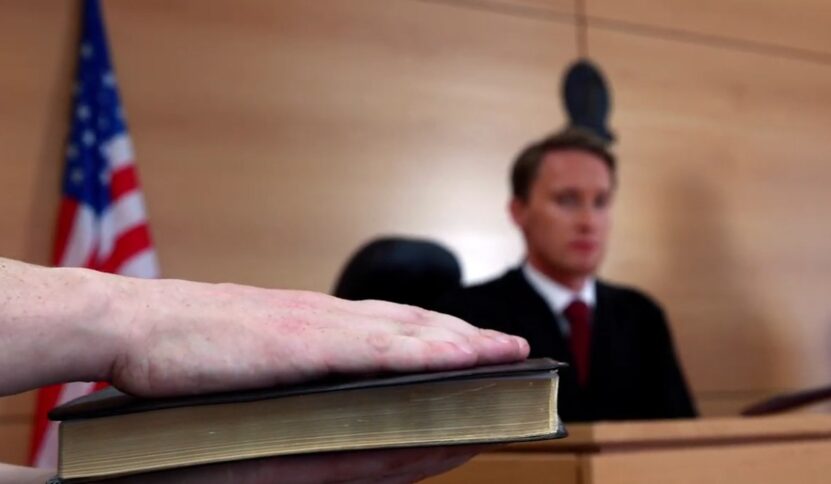
Suppose you witnessed a fight outside a bar. You arrive at court, take the oath, and then tell the prosecutor that you have changed your mind about helping with the case.
The judge may ask why you are refusing. If you believe answering would expose you to criminal charges, the court may need to consider your Fifth Amendment rights. If you are simply unwilling to cooperate, the judge may order you to answer.
Refusing after the judge has issued a lawful order can lead to contempt of court.
That does not mean every witness who hesitates or becomes upset will be jailed. Courts need to consider the circumstances, including valid legal objections and any safety concerns. A witness who does not understand a question can ask for clarification rather than refuse to participate.
Can a Witness Go to Jail for Refusing to Testify?
Yes. A judge can order a witness held in custody for refusing to comply with a lawful order to testify without a valid excuse.
In federal proceedings, 28 U.S.C. § 1826 allows a court to detain certain witnesses who refuse to testify or provide required information.
The law sets a maximum of 18 months for confinement under that provision. Detention also cannot continue past the relevant court proceeding or grand jury term.
That does not mean a witness automatically receives 18 months in jail. The judge must have a legal basis for the order, and the limits of the statute still apply.
Why Would a Judge Jail Someone Who Has Not Been Convicted of a Crime?
Courts sometimes use civil contempt to make a witness comply with an order. The purpose is to obtain the testimony rather than punish the witness for a separate criminal offense.
For example, a federal grand jury may be investigating financial fraud. A witness refuses to answer questions despite a valid order requiring testimony. The judge may order confinement under the applicable law to encourage compliance.
Once the witness agrees to testify, the reason for that particular coercive confinement may end. The court must also respect the statutory limits and any other applicable legal protections.
Criminal contempt works differently. It is meant to punish conduct that has already defied or obstructed the court. A criminal contempt sentence can involve a fixed punishment, subject to the required legal procedures.
The type of contempt matters because agreeing to testify later does not automatically cancel a punishment imposed for criminal contempt.
What If You Never Show Up to Court?
Ignoring a subpoena can create problems before anyone even asks you a question.
A court may order you to explain your absence, hold you in contempt, or take steps to bring you before the judge. The available measures depend on the jurisdiction and the circumstances.
In some cases, a judge may issue an arrest order to secure attendance. Our explanation of bench warrants issued by judges covers how courts respond when someone fails to comply with an appearance requirement or court order.
If you are unable to attend because of illness, travel restrictions, a serious family emergency, or another genuine problem, contact the attorney who issued the subpoena or the court as soon as possible.
Do not assume that informing one party automatically excuses you. Unless the court or an authorized party formally releases you from the obligation, the subpoena may remain in effect.
Can You Refuse to Testify Because Your Answers Could Get You Arrested?
Yes, in certain circumstances. The Fifth Amendment protects people from being forced to give testimony that could incriminate them.
And you do not need to be the defendant to have that right.
Imagine witnessing a drug sale that you also helped arrange. The prosecutor wants you to describe who delivered the drugs and who received the money. Answering those questions could expose your own involvement in a crime.
You may have a valid reason to invoke the Fifth Amendment.
However, the right is not a general excuse to refuse every question. A witness ordinarily invokes the privilege when a particular answer could create a real risk of self-incrimination.
For example, a question about your name may raise no criminal concern, even though questions about your involvement in a transaction do.
The judge decides disputes over the privilege. If your answers could expose you to criminal liability, speaking with your own attorney before testifying is especially important.
Can the Prosecutor Give You Immunity and Make You Testify?
Yes. Prosecutors sometimes seek immunity orders when they need testimony from someone who might otherwise invoke the Fifth Amendment.
Under 18 U.S.C. § 6002, testimony compelled under a valid federal immunity order generally cannot be used against the witness in a criminal case. The protection also covers evidence derived from that compelled testimony.
There are important exceptions. The law permits prosecution for offenses such as perjury, false statements, or failure to comply with the immunity order.
Immunity also does not necessarily stop prosecutors from bringing charges based on evidence obtained independently of the compelled testimony.
Once a valid immunity order removes the risk of self-incrimination covered by the privilege, the witness generally has to answer the questions covered by the order. Refusing can lead to contempt.
A casual assurance from an investigator that someone will not get into trouble is not a substitute for a legally effective immunity order.
Can You Refuse to Testify Against Your Husband or Wife?
Marriage can provide certain protections, but the rules are more limited than many people expect.
In federal criminal cases, the witness spouse generally holds the privilege to refuse adverse testimony against the other spouse. Federal law also recognizes protections for certain confidential communications between spouses.
Those protections are not identical. One concerns being required to testify against a spouse in a criminal case. The other concerns private communications made during a marriage.
Under Federal Rule of Evidence 501, the applicable privilege rules depend on the legal setting. State law can govern privilege questions in some federal civil cases and has its own rules in state courts.
Suppose your spouse tells you something privately during your marriage. A court may treat that communication differently from an event you personally saw in a public place.
Before refusing to answer, a witness should have a lawyer identify which privilege applies and whether an exception limits it.
Being someone’s parent, sibling, or adult child does not provide a blanket federal right to refuse testimony against that person.
What Happens If a Victim Refuses to Testify?
A victim can decide that they no longer want to take part in a criminal case. The problem is that the decision to prosecute generally belongs to the government, not the victim.
Consider a domestic violence case. Someone reports an assault, provides a statement to the police, and later asks the prosecutor to drop the charges.
The prosecutor may decide to continue the case. If the victim receives a valid subpoena, they may still be legally required to appear.
Fear can be an important part of the situation. A victim may be worried about retaliation, housing, finances, or the effect of a trial on their children. Those concerns should be brought to the attention of the prosecutor, a victim advocate, or an attorney.
Courts and prosecutors have procedures for considering witness safety, although the protection available depends on the circumstances and the jurisdiction.
Can the Case Continue Without the Victim?
Sometimes. A prosecutor may have photographs, medical records, surveillance footage, recordings, or testimony from other people.
But evidence does not become admissible simply because the victim refuses to testify. The court must still apply evidence rules and constitutional protections.
For example, the Supreme Court decision in Crawford v. Washington limits the use of certain testimonial statements against a criminal defendant when the person who made them does not testify and there was no earlier opportunity for cross-examination.
The nature of the statement is important. A statement made during an ongoing emergency may be treated differently from a formal account given to investigators after the emergency has ended.
If the missing testimony leaves prosecutors without enough admissible evidence, they may dismiss or reduce charges, seek a delay, or proceed on the remaining evidence, depending on the case.
Our article about reasons criminal cases get dismissed explains several procedural and evidentiary problems that can affect whether a case continues.
A reluctant witness alone does not guarantee dismissal.
Can a Witness Refuse to Testify Because They Are Afraid?
Being frightened is understandable, especially when a witness has received threats or knows the person accused of a violent crime.
However, fear by itself does not automatically cancel a subpoena.
If someone has threatened you because of your testimony, tell the prosecutor, your attorney, or the appropriate law enforcement agency. A court may consider protective measures, and threats against witnesses can also lead to separate criminal investigations.
Federal law addresses witness intimidation under 18 U.S.C. § 1512. The statute covers certain threats, intimidation, and other conduct intended to influence testimony or prevent participation in an official proceeding.
For a witness in immediate danger, personal safety comes first. An emergency should be reported to the appropriate authorities rather than handled through informal contact with the person making threats.
A witness should also avoid agreeing to change a statement or withhold information in response to threats or promises.
What Happens If a Witness Changes Their Story?
Changing a statement is not automatically a crime. People forget details, misunderstand questions, and sometimes realize that something they said earlier was inaccurate.
But deliberately lying under oath is a serious issue.
Federal perjury law under 18 U.S.C. § 1621 makes certain knowingly false material statements under oath criminal offenses. Other federal and state laws can also apply, depending on the proceeding.
Suppose a witness told police that they saw a suspect carrying a knife. Months later, the witness realizes that they only saw an object that looked like a knife.
Correcting that statement honestly is not the same as inventing a new story to protect the suspect.
Prior statements can be examined in court. Depending on the evidence rules, lawyers may use inconsistencies to challenge credibility, and some earlier statements may be admitted for other purposes.
A witness who realizes that an earlier statement was wrong should explain the correction accurately. Guessing, filling gaps in memory, or agreeing with a lawyer simply to finish questioning can create further problems.
Can the Judge Force a Witness to Answer Every Question?
No. Judges can require witnesses to answer lawful questions, but witnesses still have legal protections.
Some questions call for information protected by attorney-client privilege. Others may seek confidential marital communications or answers that would incriminate the witness.
In federal cases, Federal Rule of Evidence 611 gives judges authority to control how witnesses are questioned. Courts can protect witnesses from harassment and needless embarrassment during examination.
Attorneys may object to improper questions, and the judge decides how to handle those objections.
When a witness is personally exposed to criminal liability, the attorney representing one of the parties may not be the right person to provide independent advice. The witness may need separate counsel.
What If the Witness Is a Child?
Children can testify in court, but judges must consider their ability to understand questions and give reliable answers.
Federal Rule of Evidence 601 generally presumes that people are competent to testify, subject to exceptions. Federal Rule of Evidence 603 requires witnesses to give an oath or affirmation intended to impress upon them the duty to testify truthfully.
A child’s age alone does not always decide the question. Judges may consider the child’s ability to communicate, remember events, and recognize the importance of telling the truth.
In certain federal proceedings involving child victims or witnesses, 18 U.S.C. § 3509 provides special procedures designed to protect children during legal proceedings.
The use of those procedures is governed by statutory conditions. A court cannot automatically replace live testimony with a recorded statement simply because the witness is young.
Can a Witness Refuse to Testify in a Civil Lawsuit?
The obligation to follow a valid subpoena is not limited to criminal trials.
Suppose you witnessed a car accident and later receive a subpoena in a lawsuit between the drivers. You are not being accused of anything, and you have no financial interest in the result.
You may still be legally required to attend and give truthful testimony.
Under Federal Rule of Civil Procedure 45, federal courts can enforce subpoenas, but witnesses can also challenge subpoenas that impose an undue burden or seek protected information.
A witness living far from the courthouse may have a valid objection to being ordered to travel beyond the rule’s geographical limits. A person asked to turn over confidential or privileged documents may also have grounds to object.
The right procedure is to raise the issue with the court, not simply discard the subpoena.
What Should You Do If You Have Been Subpoenaed but Do Not Want to Testify?
Start by reading the subpoena carefully. The document should identify the court, the case, and the appearance or production required. Keep a copy and note any deadlines.
If the date creates a serious problem, contact the issuing attorney or the court promptly. Also, if you believe the subpoena is invalid, imposes an unreasonable burden, or calls for privileged testimony, speak with an attorney about the proper way to challenge it.
In case that answering questions could expose you to prosecution, obtain advice from a lawyer who represents your interests. Do not assume the prosecutor or an attorney for another party can protect you.
A witness who has been threatened should report the threat and ask about available safety measures. Any changes to an appearance requirement should be confirmed through the appropriate legal process.
Above all, do not ignore a subpoena or lie under oath to avoid testifying. Both choices can create legal consequences separate from the original case.
The precise rules depend on the court and state involved. For an actual subpoena, the court paperwork and advice from an attorney familiar with that jurisdiction are more reliable than assuming that every witness faces the same penalties.