
Yes, people with felony convictions can vote in many parts of the United States. In some states, voting rights return as soon as a person leaves prison. Others require the person to finish probation or parole first. A smaller group of states has additional restrictions that depend on the offense or require a separate restoration process.
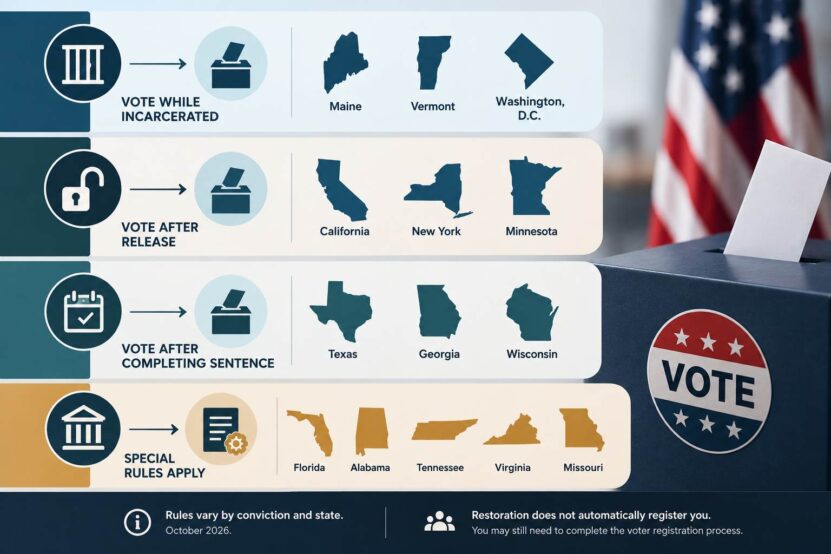
Maine, Vermont and Washington, D.C., even allow eligible citizens to vote while serving felony sentences in prison.
The rules are not always easy to follow, especially for someone who has been released from prison but remains on supervision. A person might be eligible to vote in California but still be unable to register under the same circumstances in Texas.
Several laws have also changed recently. Missouri expanded voting eligibility for people on probation and parole in August 2026, while a federal court ruling restored voting eligibility to many Virginians who previously lost that right.
Below are the voting rights restoration rules for all 50 states and Washington, D.C., based on the laws and official guidance available as of October 14, 2026.
Can Felons Vote in the United States?
A felony conviction does not create a permanent nationwide voting ban. Each state decides when people with felony convictions lose their voting rights and when those rights return.
- Voting remains available during incarceration. Maine, Vermont and Washington, D.C., allow eligible citizens to vote even while serving a felony sentence.
- Voting rights return after release from prison. Many states restore voting eligibility when incarceration ends, even if probation or parole continues.
- Voting rights return after completion of the sentence. Other states require people to finish probation, parole or other parts of their sentence.
- Additional restoration rules apply. Certain convictions require an application, pardon, court order or another process before voting rights return.
NCSL lists 23 states where voting rights generally return upon release from incarceration, 15 where people generally must complete additional sentence requirements, and 10 where certain offenses or restoration procedures create further restrictions.
Those categories are useful for comparing state laws, but some states have exceptions that are not apparent from the general classification. Missouri and Virginia are particularly important examples following their 2026 legal changes.
Automatic restoration of voting rights does not mean automatic voter registration. Someone who becomes eligible again may still need to register or update an existing registration before the election deadline.
Felony Voting Rights by State in 2026
The following table explains when voting rights generally return after a felony conviction. The rules apply to eligible U.S. citizens and should be read alongside each state’s ordinary voter registration requirements.
Some entries include exceptions for particular offenses or additional restoration procedures. A person with more than one conviction, an out-of-state conviction or an unusual sentence may need an individual eligibility review.
| State | When Can Someone Vote Again? | Special Rules |
|---|---|---|
| Alabama | After restoration of rights for a disqualifying conviction | Only specified felonies involving moral turpitude cause disenfranchisement. Eligible people may receive a Certificate of Eligibility to Register to Vote. |
| Alaska | After completing the sentence | Probation and parole generally must end. The restriction applies to convictions classified as felonies involving moral turpitude under state law. |
| Arizona | After qualifying sentence requirements are completed | Restoration depends on the conviction history and applicable financial obligations. Some people receive automatic restoration, while others must apply. |
| Arkansas | After completing the sentence | Completion of incarceration, probation, parole and applicable sentence-related financial obligations is required. |
| California | After release from incarceration | People on probation or parole can generally vote if they are not serving a disqualifying prison term. |
| Colorado | After release from incarceration | People on parole may vote. A felony conviction alone does not prevent voting after release. |
| Connecticut | After release from incarceration | People on probation or parole are generally eligible. Certain election-related convictions have additional restrictions. |
| Delaware | After completing the sentence for eligible offenses | Some convictions, including specified murder, sexual and public corruption offenses, have separate restrictions or require a pardon. |
| Florida | After completing all terms of the sentence | Required sentence-related fines, fees, costs and restitution must be satisfied. Murder and felony sexual offenses require clemency. |
| Georgia | After completing the sentence | Incarceration, probation and parole must end. Financial obligations that count as part of the sentence may affect eligibility. |
| Hawaii | After release from incarceration | People on probation or parole can generally vote. |
| Idaho | After completing the sentence | Probation and parole must end. State-level treason convictions have separate restrictions. |
| Illinois | After release from incarceration | People on probation or parole can vote once they are no longer serving a disqualifying incarceration sentence. |
| Indiana | After release from incarceration | People regain voting eligibility after imprisonment ends. |
| Iowa | After completing the sentence for most eligible offenses | A 2020 executive order restored voting rights to many people after sentence completion. Certain homicide convictions require individual restoration. |
| Kansas | After completing the sentence | Probation, parole and the applicable sentence must be completed. |
| Kentucky | After completing the sentence for offenses covered by restoration orders | Eligible people may receive automatic restoration under the governor’s executive order. Excluded offenses require separate action. |
| Louisiana | After qualifying release or supervision conditions are met | People who have been out of prison for at least five years may qualify even if still under supervision, subject to statutory exceptions. |
| Maine | Voting rights are retained | Eligible citizens can vote while incarcerated. |
| Maryland | After release from incarceration | People on probation or parole can vote. Convictions involving buying or selling votes have separate restoration rules. |
| Massachusetts | After release from incarceration | People serving felony prison sentences cannot vote, but eligibility returns after release. |
| Michigan | After release from incarceration | People on probation or parole can generally vote. |
| Minnesota | After release from incarceration | People can vote while on probation or parole following release. |
| Mississippi | Depends on the conviction | Specified disqualifying offenses require an individual restoration process. Completing a sentence alone does not restore voting rights for those offenses. |
| Missouri | After release for many convictions | Since August 28, 2026, people with certain listed felony convictions must still complete probation or parole. Election-related convictions have separate restrictions. |
| Montana | After release from incarceration | People on probation or parole can generally vote. |
| Nebraska | After completing the sentence | Voting rights return when incarceration, probation and parole are completed. The former two-year waiting period has been eliminated. |
| Nevada | After release from incarceration | Voting rights are automatically restored upon release under state law. |
| New Hampshire | After release from incarceration | People on probation or parole can vote. |
| New Jersey | After release from incarceration | People on probation or parole can vote. |
| New Mexico | After release from incarceration | Voting eligibility returns after release, including for people still under supervision. |
| New York | After release from incarceration | People on parole or probation can register and vote. |
| North Carolina | After completing the sentence | Probation and parole must be completed before voting rights return. |
| North Dakota | After release from incarceration | People on probation or parole can vote. |
| Ohio | After release from incarceration | People on probation or parole can register and vote. |
| Oklahoma | After the full sentence period ends | Eligibility depends on the legally imposed sentence period, not merely the date of release from prison. |
| Oregon | After release from incarceration | People on probation or parole can generally vote. |
| Pennsylvania | After release from incarceration | People on probation or parole can generally vote. Separate registration restrictions can apply to certain election-related offenses. |
| Rhode Island | After release from incarceration | People on probation or parole can vote. |
| South Carolina | After completing the sentence | Probation and parole must end before voting rights return. |
| South Dakota | After completing the sentence | The terms of imprisonment and applicable supervision must be completed. |
| Tennessee | Depends on conviction date and offense | Restoration may require a pardon or other formal process. Some convictions permanently restrict eligibility. |
| Texas | After completing the sentence | Incarceration, parole and probation must be completed. Certain court actions may restore rights earlier. |
| Utah | After release from incarceration | People on probation or parole can generally vote. |
| Vermont | Voting rights are retained | Eligible citizens can vote while incarcerated. |
| Virginia | Depends on the conviction under the 2026 federal court ruling | Most felony convictions no longer justify disenfranchisement under the ruling. Murder and manslaughter convictions remain restricted. Current registration guidance should be checked. |
| Washington | After release from incarceration | People on community supervision can generally vote. |
| West Virginia | After completing the sentence | Incarceration, probation and parole must be completed. |
| Wisconsin | After completing the sentence | Voting eligibility returns after all applicable confinement and community supervision ends. |
| Wyoming | After completing the sentence for eligible convictions | Qualifying nonviolent felony convictions may receive automatic restoration. Other cases require a separate process. |
| District of Columbia | Voting rights are retained | Eligible residents can vote while incarcerated, including in federal prisons. |
Table updated October, 2026. Based on the NCSL national review, published state laws and 2026 court developments. The table summarizes general eligibility rules and does not replace an individual determination by the relevant election authority.
Can You Vote While on Probation or Parole?
Yes, in many states. A person who has left prison may be eligible to vote even though they still report to a probation or parole officer.
California, Colorado, New York, New Jersey, Minnesota and several other states generally allow people to vote after release from incarceration.
For example, someone released from a California state prison who remains on parole can generally register and vote. The same person would not necessarily be eligible under the ordinary restoration rules in Texas if the sentence and supervision had not been completed.
Other states require the entire sentence to end before voting rights return. Georgia, Kansas, North Carolina and Wisconsin are among the states that generally follow that approach.
Probation and parole also need to be considered separately from incarceration. A person sentenced directly to probation may face different eligibility rules from someone serving a prison sentence.
Anyone unsure how those forms of supervision work can read our explanation of the differences between probation and parole.
View this post on Instagram
Which States Allow People to Vote From Prison?
Maine, Vermont and Washington, D.C., allow eligible citizens to vote while serving felony sentences.
A person incarcerated in Maine or Vermont does not automatically lose voting rights because of the felony sentence. Eligible voters can use the registration and absentee voting procedures available under state law.
Washington, D.C., restored voting rights to incarcerated residents in 2020. Eligible D.C. residents can vote while serving sentences in federal correctional facilities, including facilities outside the District.
The person’s voting residence remains important. Someone held in a prison located in Maine does not automatically become eligible to vote in Maine merely because the prison is there.
In most other states, people serving felony prison sentences cannot vote until a legally specified stage of their sentence has been completed.
Missouri Changed Its Felony Voting Rules in August 2026
Missouri expanded voting eligibility for people on probation and parole through House Bill 1871, which took effect on August 28, 2026.
Under the earlier rule, people generally remained ineligible to vote while serving probation or parole for a felony. The revised law limits that continued restriction to specified offenses.
According to the updated Missouri statute, Section 115.133, people serving prison sentences remain ineligible. Those on probation or parole also remain ineligible if convicted under certain criminal statutes, including specified homicide, assault, sexual offense, child endangerment and burglary provisions.
For other felony convictions, the new law generally allows voting before probation or parole ends.
For example, a Missouri resident released from prison after a felony conviction that is not among the listed exclusions may now qualify to register and vote while still under supervision.
However, Missouri also prohibits voting after certain convictions involving election offenses, including qualifying misdemeanors.
The Missouri Department of Corrections explains the new rules and directs people with eligibility questions to their local election authority.
People should not assume that every Missouri felony is covered by the new eligibility rules. The exact criminal statute under which the person was convicted determines how the law applies.
Virginia Restored Voting Eligibility to Many People in 2026
Virginia also experienced a significant legal change in 2026, following a federal lawsuit challenging its felony voting restrictions.
Historically, Virginia barred people convicted of felonies from voting unless the governor restored their rights.
The lawsuit, King v. O’Bannon, challenged the state’s restrictions under a federal law passed in 1870 when Virginia was readmitted to Congress following the Civil War.
In January 2026, a federal judge ruled that Virginia could not deny voting rights for convictions outside a narrow group of offenses recognized as felonies under the historical law.
An August 19, 2026 court opinion clarified how the ruling should be implemented.
Following the order, Virginia determined that murder, voluntary manslaughter and involuntary manslaughter were the modern felony convictions that continued to trigger the voting restriction.
The Campaign Legal Center reported in September 2026 that the ruling made more than 200,000 Virginians newly eligible to vote.
Virginia is also considering a constitutional amendment in November 2026 that would establish automatic restoration of voting rights following release from incarceration.
As of October 14, the amendment has not been decided by voters. Its proposed provisions should not be described as already enacted law.
People affected by the federal court ruling should follow the latest information from the Virginia Department of Elections, particularly if their registration was previously rejected because of a conviction.
Florida Requires Sentence Completion and Certain Financial Obligations
View this post on Instagram
Florida restored voting eligibility to many people with felony convictions through Amendment 4, approved by voters in 2018. However, the rules remain more complicated than simply leaving prison.
For most eligible felony convictions, people must complete every required part of their sentence, including probation or parole and financial obligations imposed as part of the sentence.
According to the Florida Department of State’s official voting eligibility guidance, those financial obligations can include fines, fees, costs and restitution ordered in the felony sentence.
The department also explains that certain charges added after sentencing do not necessarily have to be paid before rights return. Eligibility depends on the original court order and the amounts credited toward its financial requirements.
Florida has separate restrictions for people convicted of murder or felony sexual offenses. Those individuals must obtain clemency before regaining voting rights.
What If You Cannot Tell How Much You Owe?
The Florida Department of State advises people to obtain their sentencing documents and review the financial obligations ordered by the court.
The clerk of court can provide information about the original judgment and amounts paid toward the sentence.
A person may also request an advisory opinion from the Florida Division of Elections when uncertainty remains about eligibility.
For example, someone who completed probation and paid the original court-ordered financial obligations may qualify even if unrelated collection charges were later added to the account.
Another person who still owes part of the financial obligations imposed in the felony sentence may not yet qualify.
The exact court record is more useful than relying on a total balance shown by a collection agency.
Other States With Special Voting Rights Restoration Rules
Florida and Virginia are not the only states where the type of felony affects eligibility.
Alabama
Alabama restricts voting rights for felony convictions involving moral turpitude, a legal category defined through a list of offenses.
Not every felony causes loss of voting rights. People convicted of disqualifying offenses may qualify for a Certificate of Eligibility to Register to Vote after meeting the applicable requirements.
The Alabama Board of Pardons and Paroles handles qualifying restoration applications.
Arizona
Arizona provides automatic restoration for some qualifying convictions after applicable requirements have been completed.
People with multiple felony convictions or other circumstances outside the automatic restoration rules may need a court order.
The applicable financial obligations and the final court disposition are important when determining eligibility.
Kentucky

Kentucky restored voting rights to many people with past felony convictions through a 2019 executive order.
The order covers specified state convictions after completion of sentence requirements. Certain violent crimes, sexual offenses and other excluded convictions require additional action.
The original conviction and its legal classification determine eligibility.
Mississippi

Mississippi has a list of criminal offenses that cause loss of voting rights.
For people convicted of those offenses, completing the sentence does not automatically restore the right to vote.
Restoration may require action under the procedures allowed by state law, including legislative action or other qualifying relief.
Tennessee
Tennessee has particularly detailed rules tied to the offense and the date of conviction.
Some people must obtain a pardon or complete a separate restoration process. Certain convictions are excluded from restoration under ordinary procedures.
A person convicted before a change in the law may also fall under rules that do not apply to a more recent conviction.
Wyoming
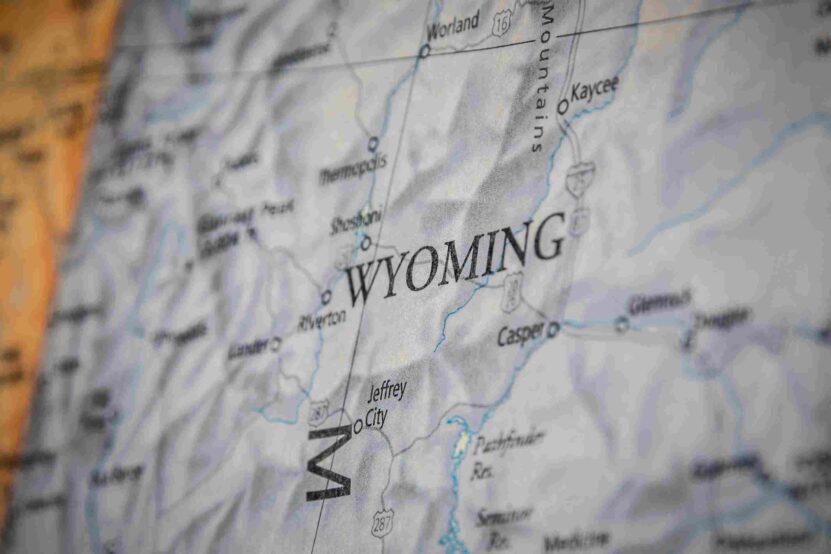
Wyoming provides automatic restoration for qualifying nonviolent felony convictions after the required sentence conditions are completed.
People with convictions outside those requirements may need a separate application or other legal relief.
For these states, the exact offense and sentencing documents should be reviewed before assuming that voting eligibility has returned.
How to Restore Voting Rights After a Felony Conviction
People whose voting rights have not yet returned need to determine the restoration procedure that applies in their state.
The process begins with the final criminal case record, not with a general statement that all felony convictions lead to permanent disenfranchisement.
1. Find Your Exact Conviction and Sentence
Obtain the final judgment from the court that handled the case.
The record should show the offense, statute of conviction, sentence imposed and whether probation or parole formed part of the sentence.
For states with offense-specific restrictions, the statute number is particularly important. An informal description of the crime may not be enough to establish voting eligibility.
2. Confirm When Your Sentence Ended
If state law restores voting rights after completion of the sentence, obtain documentation showing that incarceration and any required supervision have ended.
Someone who has finished prison time but remains on probation should not assume that the entire sentence is complete.
Likewise, a person released early from supervision may need official documentation confirming the actual termination date.
3. Check the State Restoration Procedure
Some states restore voting rights automatically. Others require a court application, certificate, executive action or another form of official approval.
The U.S. Vote Foundation provides state-specific voting eligibility information for people with criminal convictions.
The state election authority should confirm the current requirements before an individual submits a registration form.
4. Obtain Proof of Restoration When Required
In states that use certificates, court orders or pardons, retain copies of the final documents.
People whose rights return automatically should still keep their discharge paperwork and any written confirmation from the appropriate agency.
Those records can help resolve a question if the voter registration database still contains an outdated disqualification.
5. Register to Vote
Once voting eligibility has returned, the individual must follow the normal registration process.
Automatic restoration does not usually create a new voter registration record.
A person previously registered before incarceration should also confirm that the old registration remains active. Depending on state procedures, a new registration may be necessary.
Can You Vote After a Federal Felony Conviction?

Yes, a federal felony conviction does not automatically create a permanent nationwide voting ban.
Voting eligibility generally depends on the law of the state where the person currently resides, including the state’s treatment of federal felony convictions.
For example, a person who has completed a federal prison sentence and lives in California may generally register after release if they meet the ordinary eligibility requirements.
A person living in Texas may have to complete probation, parole or other required portions of the federal sentence before voting rights return.
Federal convictions also create complications in states where restoration procedures depend on the court or government that imposed the sentence.
A state court generally cannot simply erase a federal conviction through its ordinary expungement procedure.
Our guide to removing or sealing a felony record explains why record clearing and restoration of legal rights are separate processes.
Do Unpaid Fines or Restitution Stop Someone From Voting?
Sometimes. The answer depends on state law and the financial obligations attached to the criminal sentence.
Florida is a prominent example because it requires completion of specified court-ordered financial obligations for many felony convictions before voting rights return.
Other states have their own rules about fines, restitution, discharge from supervision and sentence completion.
Not every unpaid debt causes loss of voting eligibility. A person with an outstanding civil debt is not automatically barred from voting simply because they owe money.
Likewise, a collection fee added after the original criminal sentence may be treated differently from restitution ordered by the sentencing court.
For people unsure about financial requirements, the sentencing court and state election authority are the appropriate sources for the controlling records and legal rules.
Does a Felony Conviction Affect Other Rights?
Voting is only one legal issue people face after a felony conviction.
A criminal record may also affect professional licensing, firearm possession, certain public offices and international travel.
Each area follows its own laws. Regaining the right to vote does not automatically restore firearm rights, erase a conviction or end every restriction created by the sentence.
International travel provides another example. Our article Can a Felon Get a Passport? explains how passport eligibility works after a criminal conviction and why the offense and current legal restrictions are important.
A person who qualifies to vote may still face separate restrictions on travel or other activities. The reverse is also possible. Having a valid U.S. passport does not prove that voting rights have been restored.

How to Check Your Voting Eligibility Before Registering
People with felony convictions should confirm their eligibility using the state where they currently live.
Someone convicted in one state but now living in another may face additional questions about how the current state treats the earlier conviction.
The Campaign Legal Center’s Restore Your Vote resource provides information designed to help people determine their eligibility after a conviction.
Official election offices can also explain current registration requirements and direct people to the relevant state agency when a criminal record creates uncertainty.
- The state where the person currently resides.
- The state or federal court that entered the conviction.
- The exact criminal offense and statute.
- The date incarceration ended.
- The status of probation, parole or other supervision.
- Any restoration certificate, pardon or court order already issued.
- Any financial obligations that state law makes part of the eligibility rules.
If a registration application was rejected because of a felony conviction, the notice may explain how to challenge the decision or provide additional documentation.
A person who has received conflicting information from government agencies may need assistance from an election-law attorney or a legal aid organization familiar with restoration procedures in that state.
Frequently Asked Questions
Things to Know Before the Next Election
For many people with felony convictions, voting rights return without a separate application once the legally required stage of the sentence has ended. Others must complete supervision or obtain formal restoration before registering.
Missouri’s August 2026 law and the federal court ruling in Virginia show why older voter eligibility guides may now give the wrong answer.
The safest starting point is the exact conviction and the law of the state where the person currently lives. From there, the state election authority can confirm the applicable requirements, registration deadlines and available procedures for correcting an outdated record.
Legal information updated October, 2026. State voting laws, court decisions and administrative procedures can change. This article provides general information and is not a substitute for an individual eligibility determination or legal advice.